My performance in (or to be honest, lack thereof) in the 2025 Grandma’s highlighted the importance of consistency in training and its specificity to the target distance. The DNF in Duluth was a blessing in disguise … stepping off the course when I did had kept me from digging myself into too deep a hole, and in turn, had kept my train(ing) on track. Support – moral or otherwise – from friends in/around the endurance community and implementing few more tweaks helped me work iteratively work through bouts of faux and real recovery from certain nutrient deficiencies. While stepping off the course shortly after the 20-mile mark in Marquette kept the streak of marathon DNFs alive and could easily be misconstrued as taking yet another step backwards, the final few weeks of training with near-normal energy levels gave me plenty of confidence to move forward!
da Quick Recap
The new year, 2025, had begun on the right foot … or at least had felt like it. Quietly building speed/stamina through the Winter had led to 0:20:00 for a solo 5k Time Trial during Birkie Week. It had given me plenty of confidence that I’d perform well in the subsequent marathon phase. The quick blood test and just as quick results (thanks, Shannon) in mid April had shed light on certain (easily avoidable … even in plain sight) nutrient shortages. Discussions with good friends (thanks, Clayton and Shannon) had helped me realize that I had also been inadvertently and incrementally overtraining for the first 3-ish months of the calendar year (also easily avoidable … at least in hindsight). Letting the body heal from these situations (and another bout of plantar fasciitis) meant that my training towards the 2025 Grandma’s Marathon – the race – was neither consistent nor specific. Coupled with heat and humidity, my race had ended long before the official finish line.
On the positive side of things … I had a working draft of the 2025-2026 season training plan with a healthy blend of various modalities that featured my learning and teaching philosophies – freedom within discipline and excitement within boredom – to help guide my longer term development plans (thanks, Jason and MikeY). As they normally do … at least when I am out and about without music/podcast, the solo endurance outings had brought along some useful (re-)revelations.
- Rest doesn’t mean regression.
- Common practice and best practice aren’t necessarily the same.
- Size of the physiological wall matters more than that of any single brick.
- Progress may not always be linear, and invisibility of progress doesn’t imply an ineffectiveness of the process.
- Endurancing is a what have you done for me consistently and specifically endeavor and unless the Average Value is computed over a long period of time, it doesn’t necessarily paint the complete picture.
da Training
Not all that long ago, the venerable BAA folks had tightened the theoretical qualifying standard by 5 minutes for almost all athletes – sans the wily and wiser ones in the 60+ category – for the 2026 edition and beyond. In a move that was deemed long overdue by many, irritated several and surprised very few, the BAA introduced two more changes to the qualifying window and races for the 2027 edition and beyond (what was before and what is now):
- Qualifying window
- Started on September 1st of each year and remained open through the registration week in the following September.
- Starts the day after the registration week closes in September and remains open through the registration week in the following September. This eliminated the brief magical window of opportunity in September where athletes could BQ once and potentially run two subsequent consecutive Boston Marathons.
- Qualifying races
- All eligible races were equal.
- Index for eligible races that have a net downhill of 1500-2499 feet (+5 minutes) and 2500+ feet (+10 minutes). Index is just a fancy pants term for time penalty.
A part of the Marquette Marathon’s lure has been its proximity to the end of qualifying window and in certain special years, being in that magical double dipping window. I don’t believe 1.2 affects the popularity of this event in any way shape or form. And any loss of that popularity should be (and was and will be) easily made up by the fact that 2.2 doesn’t apply for Marquette Marathon’s net downhill course.
Enough about the BAA, and back to me, now. Building progressively from the aforementioned fatigue and nutrient deficiencies, the training was very consistent and semi-specific to the desired racing distance … with a sensible sprinkling of more than prescribed amount of volume and intensity – call it, cautious and positive overreaching. Did you not learn anything from the recent bout of overtraining and nutrient deficiencies? Excellent question. The short answer is … I did. But why stop at a short answer when a long one will do. So … this time around, I had guardrails and ceilings (read: the care and guidance of my friends, mentors, coaches and healthcare system) to keep the train on track as it navigated around/through numerous instances of self-doubt, trepidation, worry, faux recovery, reversion to fatigue, itch to switch to the half marathon (or worse, scrub the event entirely) and what, on many occasions, felt like two steps back for every step forward.
Almost all of that extra stuff was at a very low intensity (and/or minimal impact on joints) and any undocumented time on feet (as in … not tracked by any specific activity) was budgeted into the weekly volume. Adjusting the weekly structure and letting go of structured workouts in the final few weeks prior to the 2025 Marquette Marathon and somehow convincing myself that the feeling of going backwards was a part of the process/progress weren’t easy. Though my primary intent in enlisting adult supervision for formal strength sessions was to prevent injury (especially, plantar fasciitis), I was graciously guided to and through more sets and reps of some of the most challenging (to me) exercise combinations than I had ever (or would have) done on my own.
-
A Trade-Off Between Cognitive And Physical Performance, With Relative Preservation Of Brain Function
D. Longman, J. Stock, J. Wells
Scientific Reports, vol. 7, p. 13709 (2017) -
Functional Overreaching In Endurance Athletes: A Necessity Or Cause For Concern?
P. Bellinger
Sports Medicine, vol. 50, p. 1059 (2020) -
The Effectiveness Of The Psychological Intervention In Amateur Male Marathon Runners
J. Jaenes, D. Wilczynska, D. Alarcon, R. Penaloza, A. Casado, M. Trujillo
Frontiers in Psychology, vol. 12, p. 605130 (2021)
Discussions with friends and mentors and nuggets from Fuel For The Sole, Hidden Brain, Race Ready and Some Work All Play and findings from the above peer-reviewed research studies were used to (re)tool/adjust the training as necessary … to ensure that I didn’t go back any further than two steps at a time. I had used #1 and #2 in prior training blocks. While I had been using one of the intervention techniques outlined in #3 for about as long as I have been endurancing, including others helped divert cognitive resources to a better cause than just overthinking things that were usually beyond my control. The USATF Marathon Specialist Course in the latter parts of week #09 explained my poor showings in some of the previous marathons and taught me what/how I can do better moving forward.
The color-coded status (consistent or successful; inconsistent) of goals I had for this marathon phase was as follows. Consistency in sleep and return to real sense of normalcy went hand in hand. The apparent inconsistency in functional strength training was a result of 2x formal strength sessions being deemed enough by the aforementioned guardrails and ceilings.
- Commit to improving sleep, nutrition and hydration.
- Consistency in functional and formal strength training.
- Complete the suggested activity before the cognitive load built up too much.
- Consistently diversify the modalities and surfaces and weather conditions and efforts/paces each week.
- Use a sustainable distribution of trackable modalities to minimize the chances of injuries.
The table below provides a quick little numerical summary of the trackable activities I completed. The beautiful orange-yellow button below the table reveals the usual interactive eye candies. Higher compliance score was a result of adapting the training to the aforementioned iterative bouts of faux and real recovery. If interested in the details of my individual activities, kindly check out my Strava profile.
Overall Summary2025-06-23 - 2025-08-31Duration in h:mm:ss, distance in miles (and kilometers) and elevation gain in feet (and meters) |
|||||
|---|---|---|---|---|---|
| # | Activity Type | Count | Duration | Distance | Elevation |
| 1 | Bike | 17 | 11:00:23 | 123.04 (198.09) | 93 (28) |
| 2 | Hike | 3 | 4:08:29 | 12.26 (19.74) | 1260 (384) |
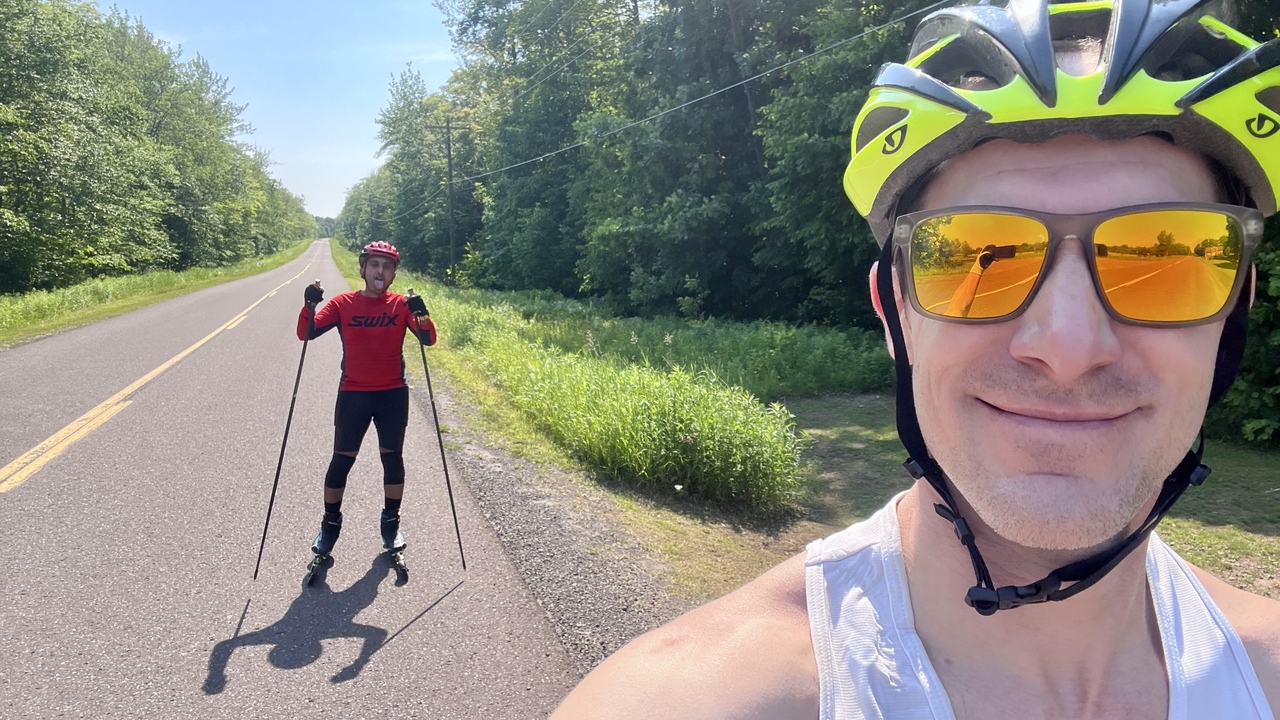
| 3 | Rollerski (Skate) | 6 | 5:51:48 | 39.12 (62.98) | 386 (118) |
| 4 | Run | 63 | 64:41:56 | 403.52 (649.67) | 9871 (3009) |
| 5 | Strength | 16 | 13:27:37 | - | - |
| Total | 105 | 99:10:13 | 577.94 (930.48) | 11610 (3539) | |
| Average (10 Weeks) | 11 | 9:55:01 | 57.79 (93.04) | 1161 (354) | |
da Event Week
It brought along the usual servings of suspicions about the quality and quantify of preparation. Reviewing the training log objectively revealed that … while mostly consistent and somewhat specific over the past 10 wees, I had completed (a) back to back long runs on 8 of the 10 weeks and some of those long runs had marathon pace and/or elements of progression in later miles, (b) 2 of those bigger long runs (and few more shorter ones) were on the official course, and (c) at least one formal and supervised strength session every week – a first for me – that gave additional opportunity to implement interventions from aforementioned study #3. All in all, I felt like I had invested enough to cover the distance and potentially be within a stone’s throw of my current PR.
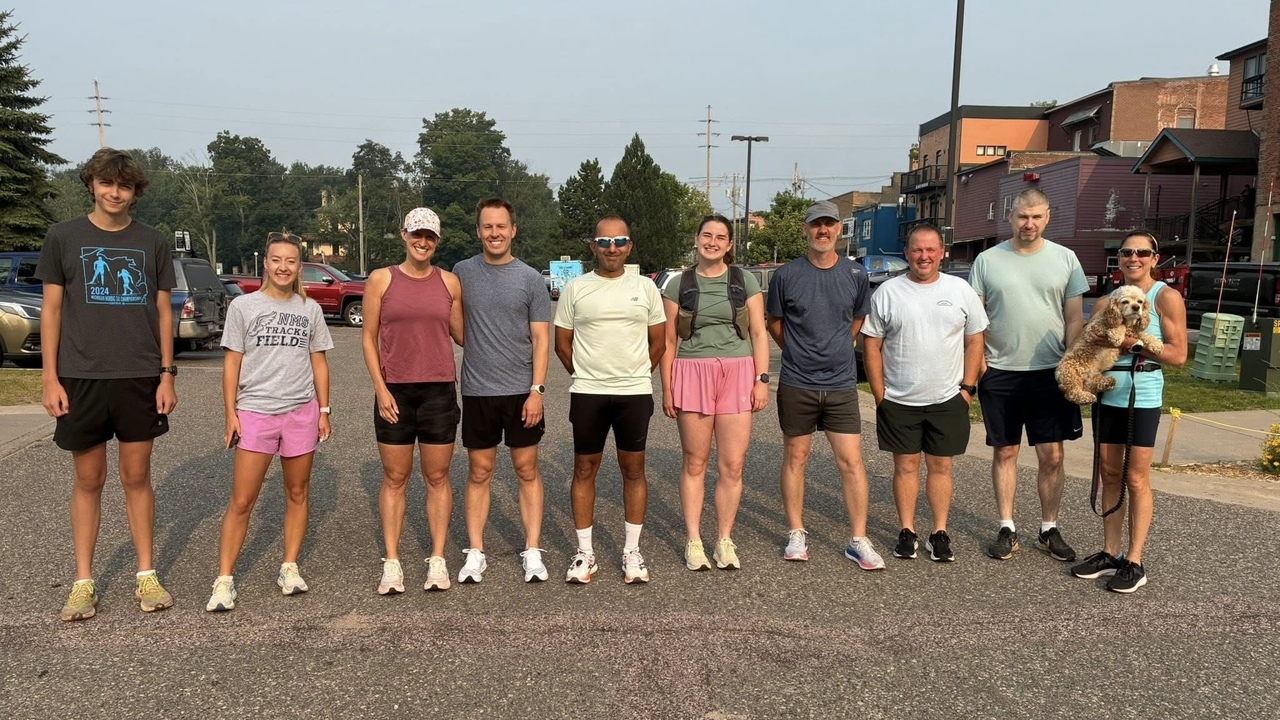
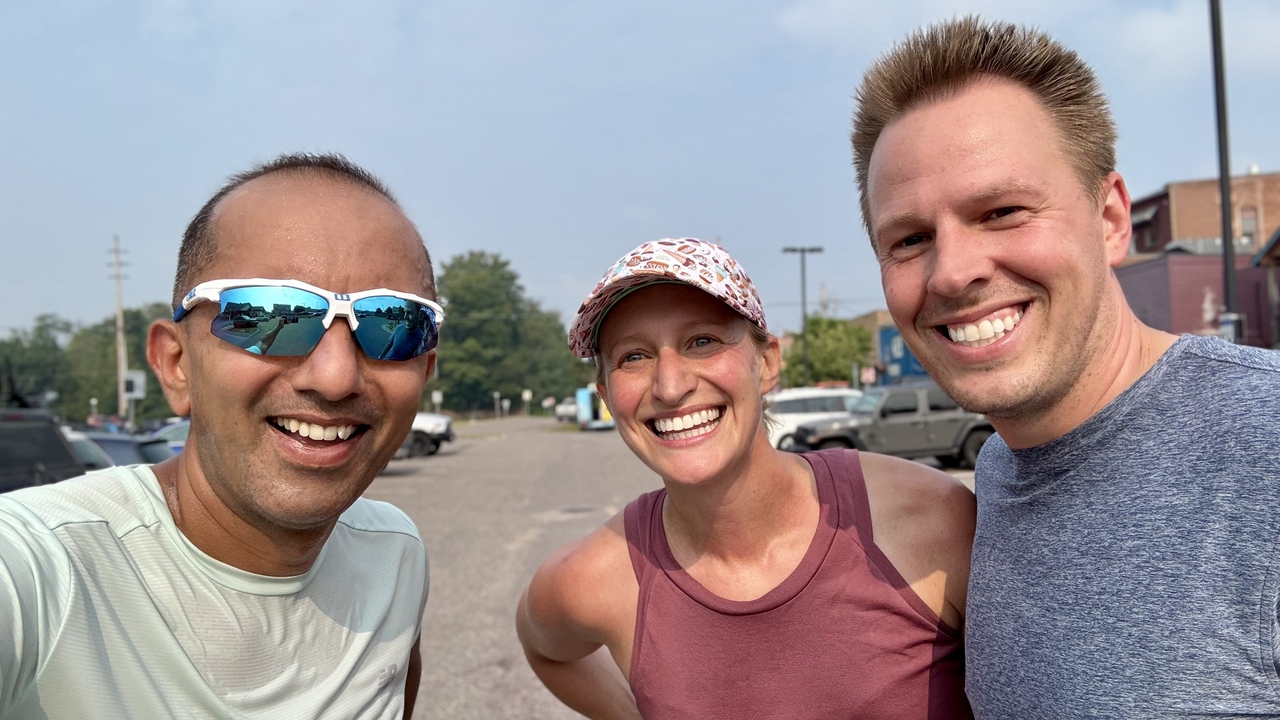
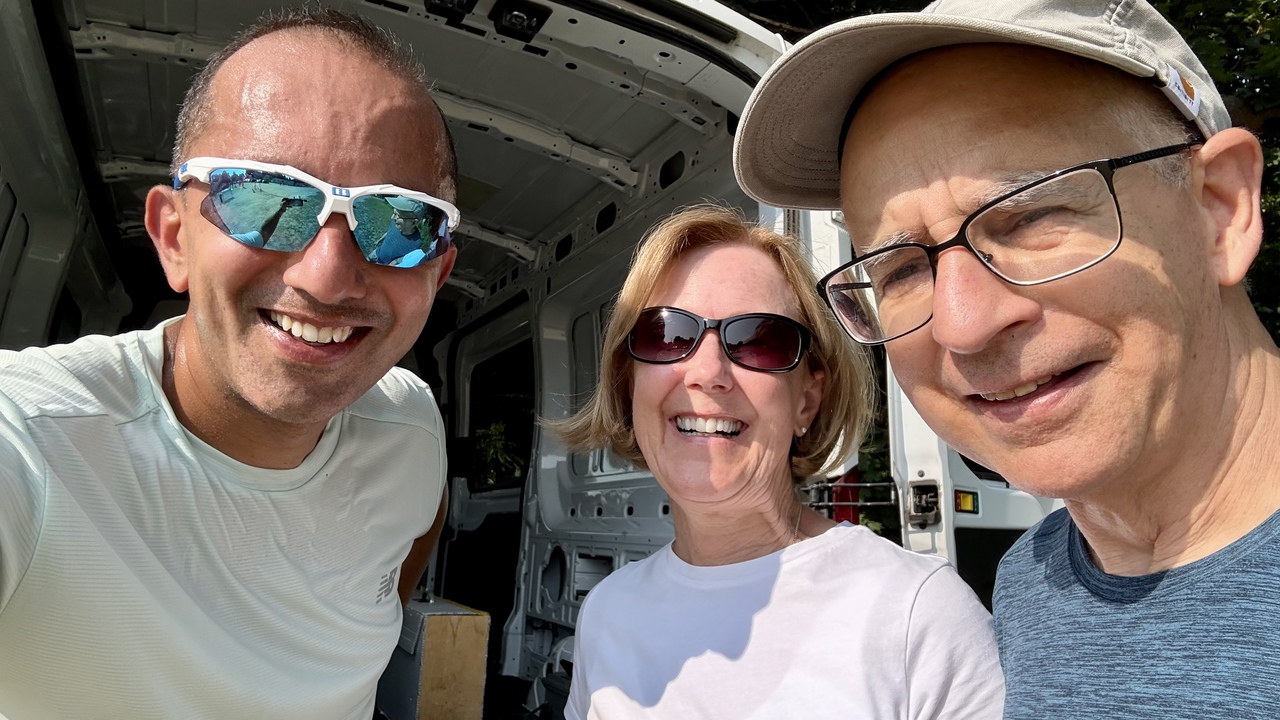
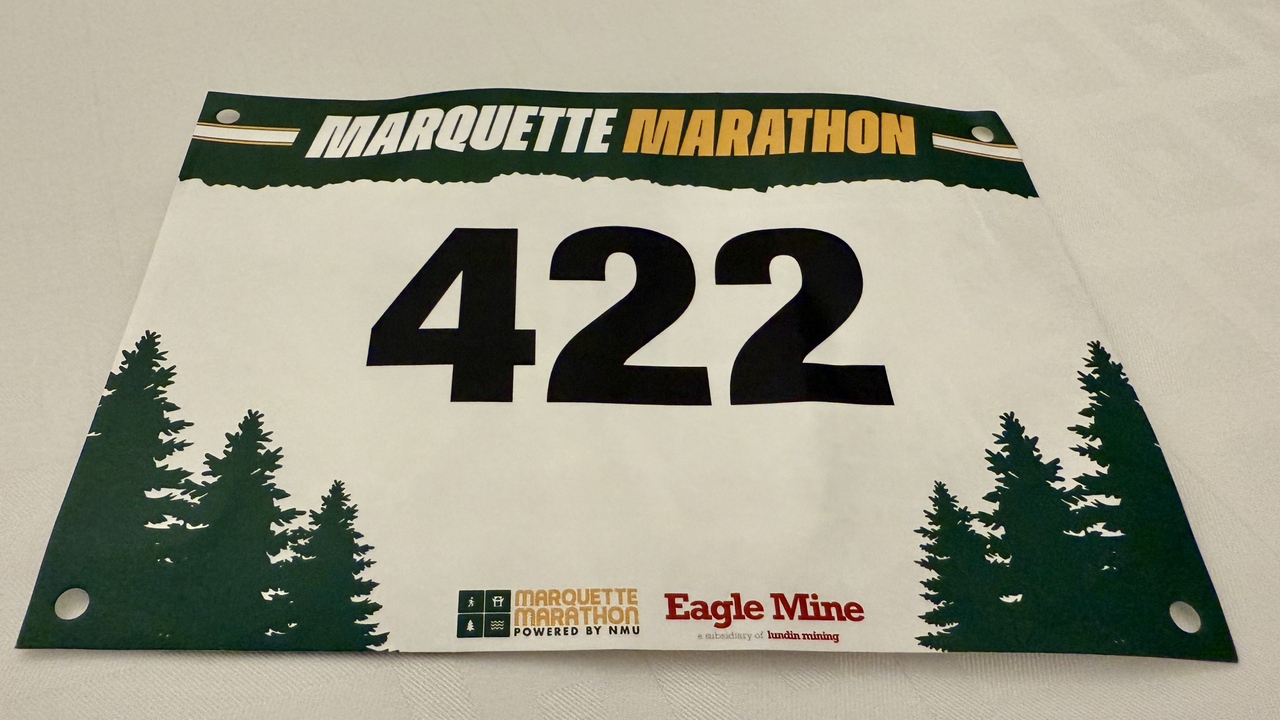
I left Houghton around noon (all times Eastern) and reached Marquette shortly before 3 pm. After checking into the housing arrangement, I completed the dinner formalities at The Delft Bistro by 3 pm in an attempt give my digestive system enough time. After picking up my race packet at the Superior Dome, I got to spend some quality time with many fellow participants (and their crew) until the expo ended. After a very short trip to the Marquette Food Co-op to acquire some bananas, I called it a night around 10 pm.
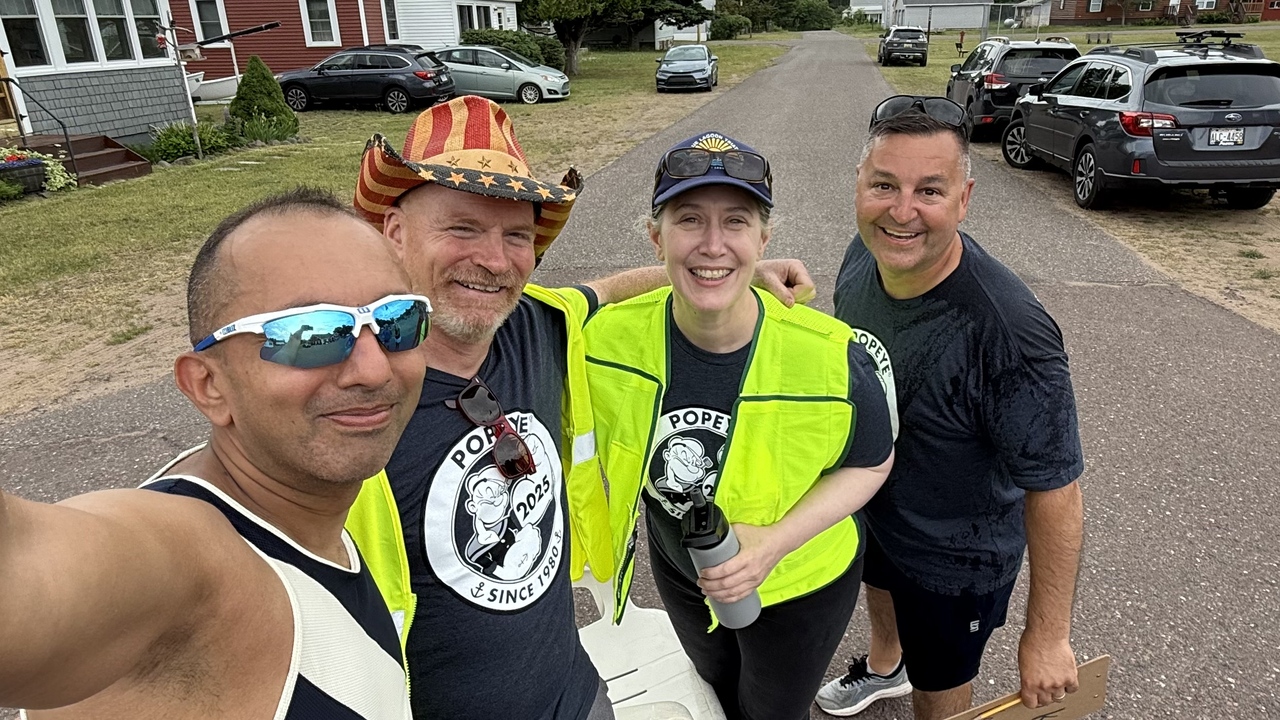
Morning started around 4:30 am after a decent night of sleep. A short walk brought me to the Superior Dome, and I got on one of the last bus rides with Rob to the start line near Cliffs Shaft Mine Museum in Ishpeming. I had sufficient time to catch up with friends, complete the static W/U routine, drop the bag, chat with the 3:30:00 pacer and line up before the Star Spangled Banner rendition.
On a day with blessedly pleasant weather – tailor-made for running and running long, I started with the 3:30:00 (8:00 min/mile), and ran with about as much peace and discipline as I have in quite some time. After checking the first mile at 8:01, I just assumed the pacer would keep to even splits as indicated pre-race and didn’t check the splits to minimize cognitive expenditure … until shortly after mile 14 when the physical effort I experienced didn’t match my mind’s expectation for the 8:00 min/mile pace.
Looking at my Garmin, I realized I had banked one too many minutes for it to turn out well. So, I slowed down over the next couple miles to regroup and get the average pace to drop. As it turned out, it was a bit too late for damage control and I hit the wall hard around mile 18. Greta‘s company helped me get past mile 19. With very little to gain in the final 10k (read: this was the 6th week of feeling almost normal and this was not my target race and 6 more miles in that bonked mode would have prolonged the recovery, if not reverting me to the old fatigued state and an entirety of autumn lay ahead to make more progress with more of consistent training), I stepped off the course shortly after mile 20.
Process-, Event- and Time-Based GoalsListed in order of importanceEvent-based is used in place of Performance-based AND Time-based is used in place of Outcome-based to clarify the listing |
||
|---|---|---|
| # | Description | Status |
| P1 | Train well - using the plan as a guide and seeking help and making necessary adjustments to accommodate sufficient recovery, absorption and adaptation, and developing necessary belief and faith. Toe the start line healthy, and with good attitude and energy. | Yes |
| E1 | Complete the event. | No |
| E2 | Start with the 3:30:00 pace group, stay with the group through 20 miles, run the final 10k at or faster than the moving average at mile 20, and implement the planned nutrition and psychological interventions. | Yes/No |
| T1 |
Finish below 3:33:58
(8:10 min/mile ≡ 5:04 min/km; 7.35 mph ≡ 11.83 kmph)
Improve upon the event PR from 2023 Marquette Marathon. |
No |
| T2 |
Finish below 3:21:47
(7:42 min/mile ≡ 4:46 min/km; 7.79 mph ≡ 12.53 kmph)
Improve upon the distance PR from 2023 Grandma's Marathon. |
No |
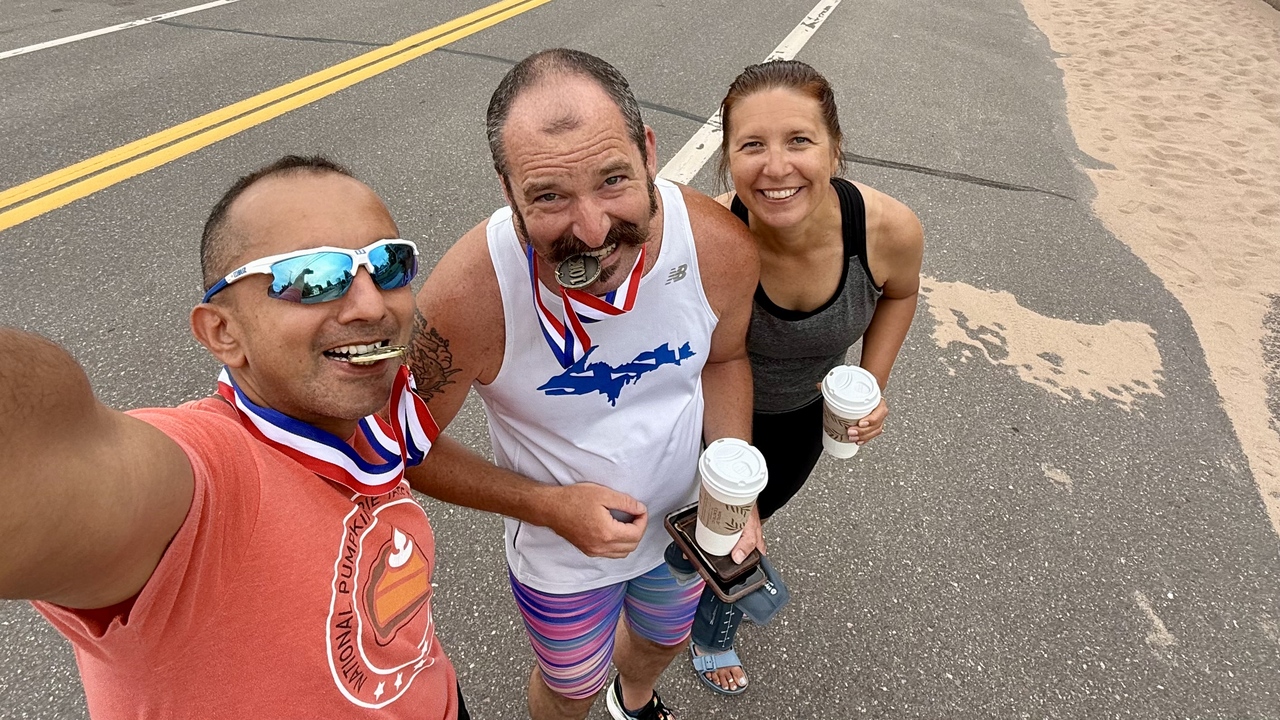
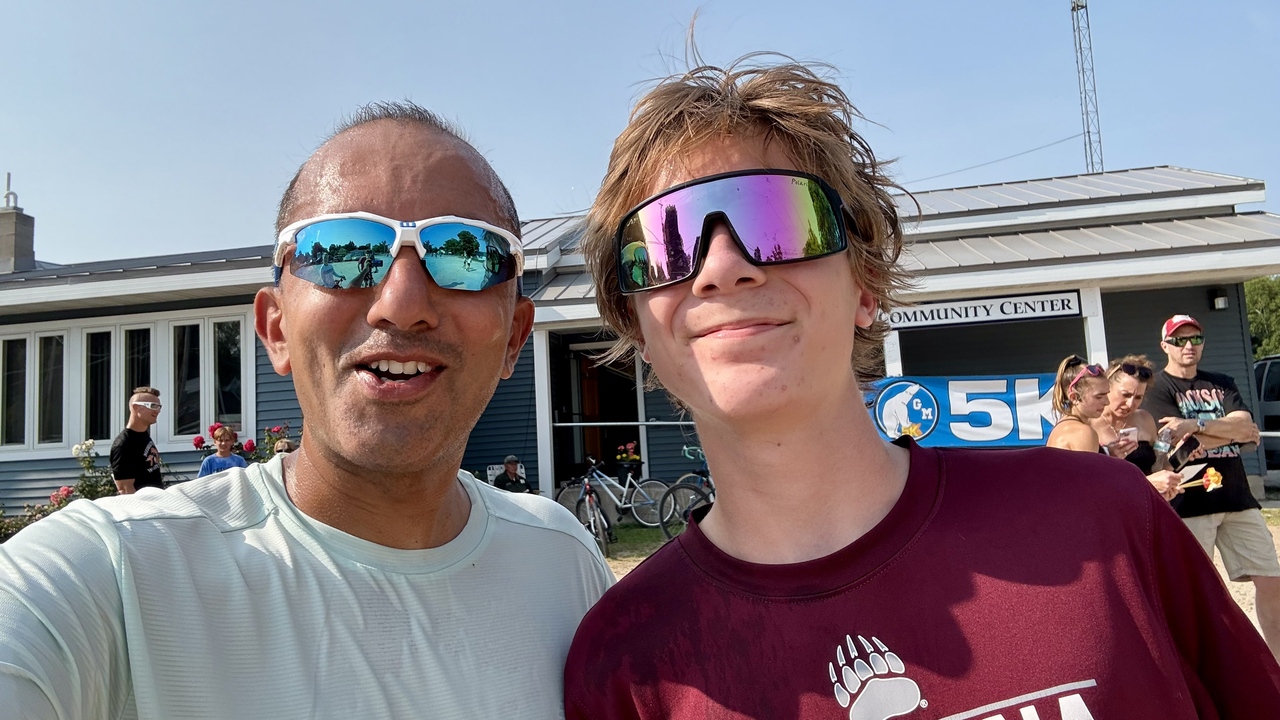
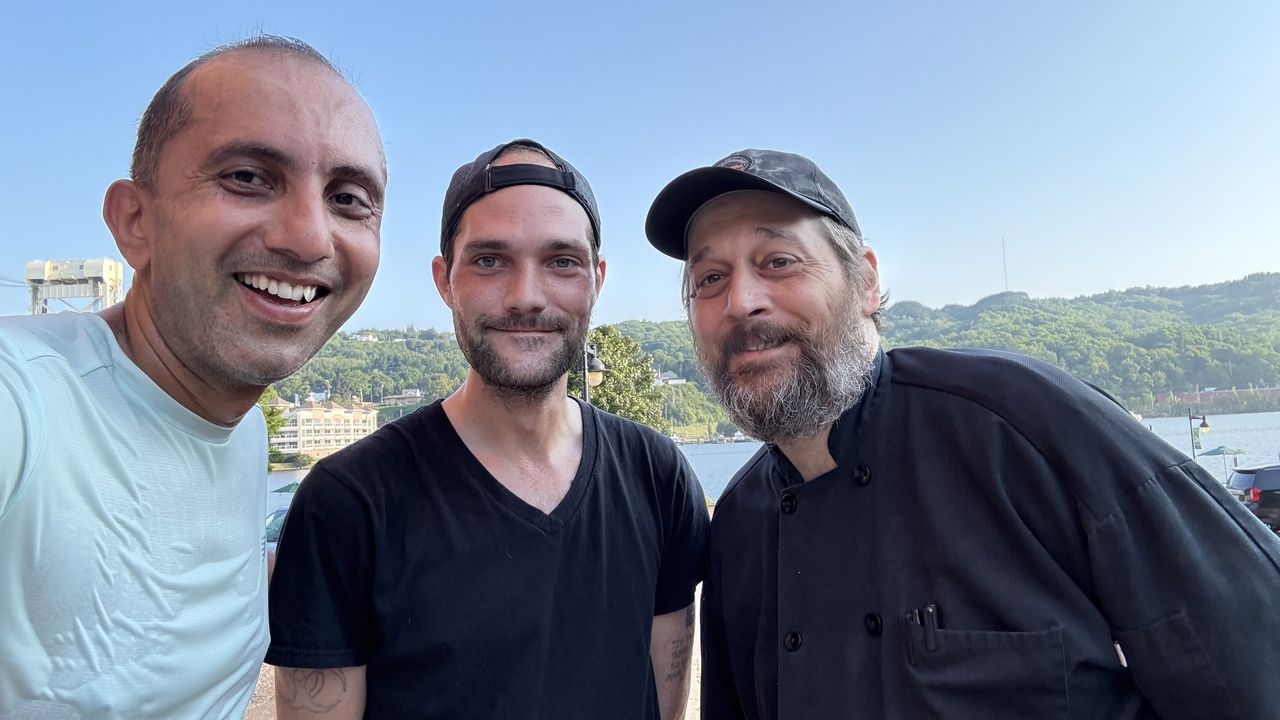
Letting the race officials know of my situation and reporting myself as DNF to Superior Timing was the first order of business. Celebrating the success of friends who crossed the finish line was the next item. Once I felt recovered enough, the walk back to the housing felt fairly normal (as in, not wobbly or painful – at least not any more than a 20-mile hard long run). Shortly after getting cleaned up and applying enough cologne to hide the stench of yet another DNF, I made my way to the after party at the Blackrocks Brewery. Catching up with and learning more about my friends (and their WHYs and such) over bites of food and sips of beverages made the time fly by. The night ended shortly after more hearty discussions and nutrition at Thai House Kitchen. The return journey home on Sunday was smooth and uneventful.
da Takeaways
Time for the first three 5-mile chunks, computed long after the run was done, was 38:40, 39:35 and 39:00. The deviation from the ideal value of 40:00 – -1:20, -0:25 and -1:00 – does not seem like much on paper. The wily veterans, though less than thrilled with my decision to DNF (and rightfully so), reiterated that while -0:05 per mile doesn’t usually hurt, -0:10 per mile (or faster) was a recipe for a less than desirable ending.
At the beginning (and the end) of the day, the decision to follow the pacer was mine and so was that of to not check the splits frequently. What could have I done had the pacer been metronomically consistent at 8:00 +/- 0:05 min/mile? Since the arrow of time glides forward, albeit at varying relative paces, like an unhurried and never pausing river that knows no return, there is no opportunity to relive the same moment again. In the absence of any progress by the experimentalists (scientists and engineers alike) to meaningfully reverse the said arrow of time at a macroscopic level, my speculations of what could have been are no more useful than the g in lasagna.
To put a positive spin on this outing, I chose to treat it as a 20-mile long run with bulk of the miles at hard-ish effort … something I have had a difficult time accomplishing on my own. For that alone, I was/am grateful for the pacer and fellow runners in that group. To learn from the incident for future and potentially key events, keeping a better eye on the feel and checking the splits every 5 miles and should they be inconsistent, being brave/smart enough to run my own race would serve me well.
All in all, the short and sweet training block from late 2025 June through late 2025 August brought me plenty of joy, few frustrations and more valuable lessons. I might not be going where I wanted to go just yet but a tangible sense of real-normal energy levels brought much confidence for the immediate (and long term) future. While a few pieces of the 2026-2027 season training plan remain unresolved, I gained a much better idea of how to place many other pieces and of avoidable mistakes. That said, in the spirit of the more you eff around, the more you find out … there’s plenty more to eff around so that I can find out more about myself, what works, when and why.
Thanks be to
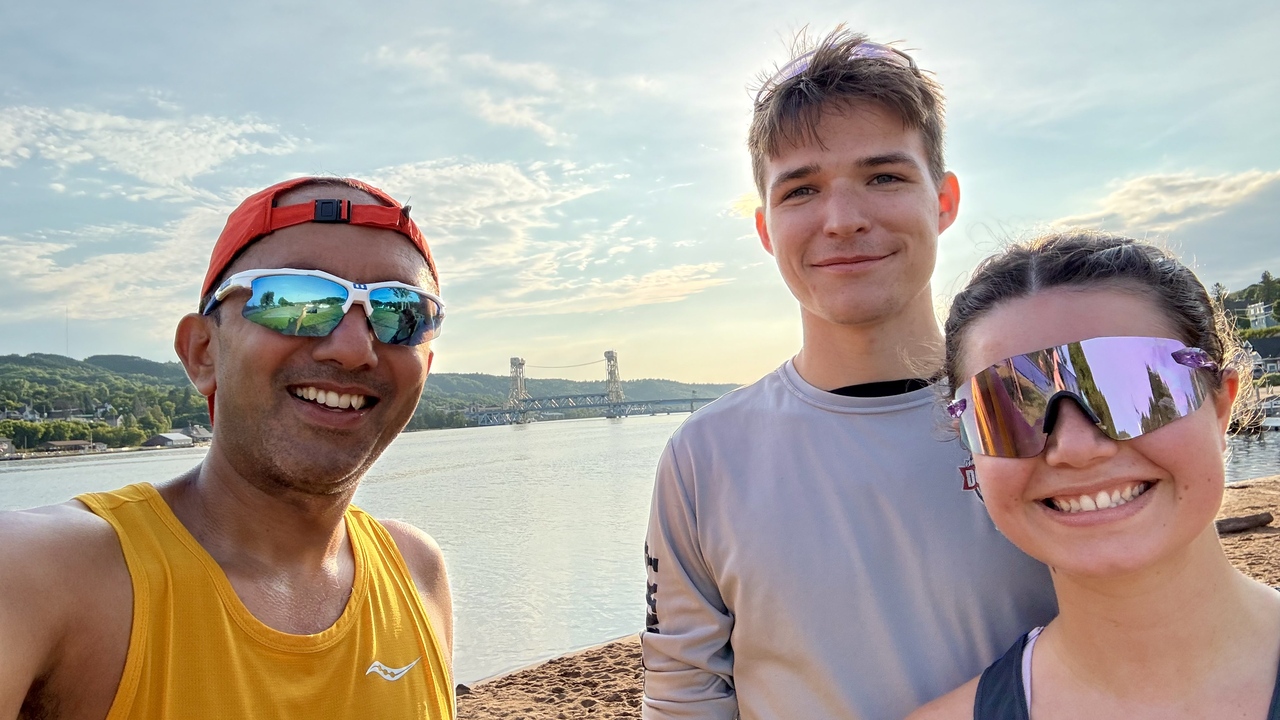
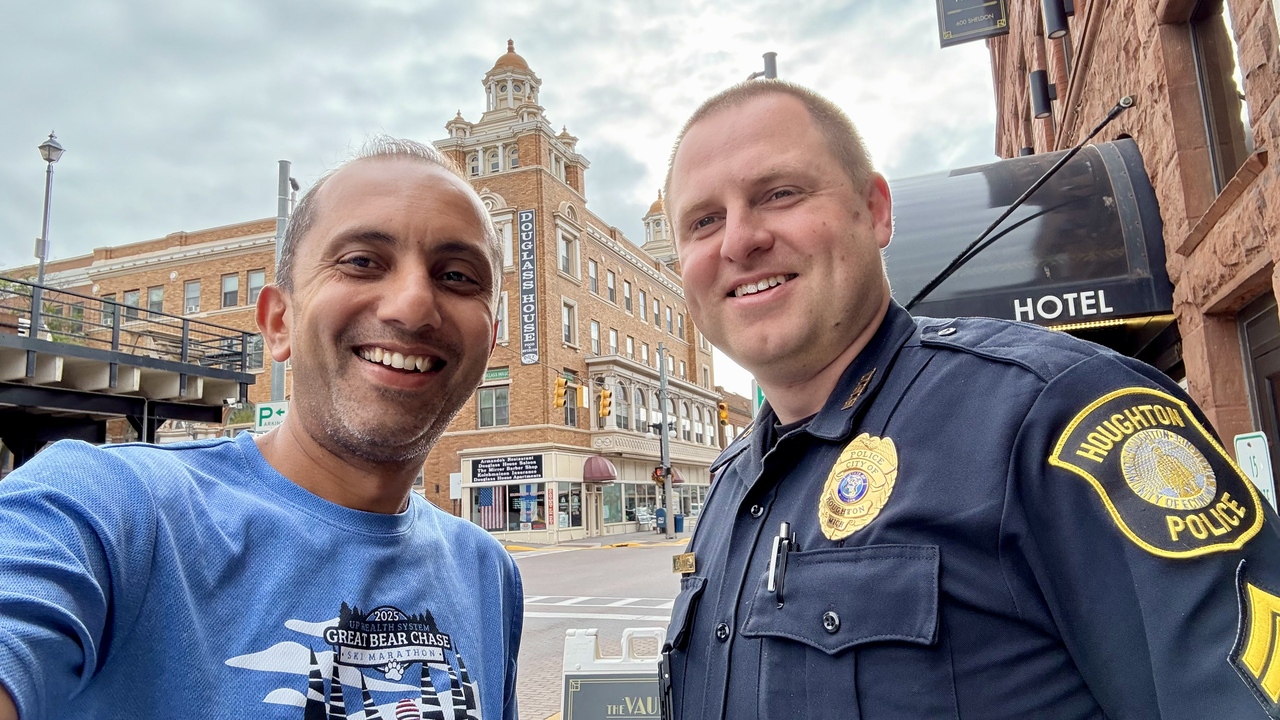
the rejections and opportunities life has brought my way, event folks (organizers, sponsors, volunteers, timers, law enforcement officials, photographers, fellow participants and spectators) and my family of good friends, mentors and coaches in and outside of my community for all the unexpected, undeserved and unrewarded acts of kindness and constant encouragement as well as offerings of constructive criticism to improve myself as a human and an athlete. I am eternally grateful to all those who let me train with them, who shared their meals and experiences with me, who helped keep me in good health, who helped me stay the course, and who cheered me on from home or along the course.