The past 40-ish weeks (especially, the past 16) have been my most consistent training attempt yet. The journey included the usual bounty of help from the family of my friends and the healthcare system, and the hitherto unusual doing many little complementary things well. In turn, the improvements in health and fitness felt very organic. Although the end result was another DNF, the training brought plenty of positives and lessons I can implement moving forward.
Summary of historical lessons
A review of my training log and my best performances at various distances showed that the equivalent marathon finish time was all over the place. The once rolled/sprained ankle in 2021 June had led to drastically reduced training volume and significantly altered race schedule rest of that calendar year. On the brighter side of things, the healing process associated with that ankle had helped me regain some of the lost perspectives on the joys of running. I was a good patient during that process – running only when prescribed and resuming training as usual in the last week of 2021 October/first week of 2021 November. In light of this time off, I felt a need to incrementally build up my fitness, endurance and confidence without causing any setbacks.
Pre-Foundation Phase PerformancesDistance in miles, time in h:mm:ss and pace in m:ss/mile |
|||||
| # | Date | Event | Distance | Time (Pace) | ≊ Marathon Time (Pace) |
|---|---|---|---|---|---|
| 01 | 2020-09-01 | 2020 Solo Time Trial | 1.00 | 0:05:31 (5:31) | 3:06:35 (7:07) |
| 02 | 2021-10-30 | 2021 Queen City Trick or Trot | 3.11 | 0:21:08 (6:48) | 3:25:03 (7:50) |
| 03 | 2021-06-26 | 2021 Hodag Run | 6.22 | 0:46:51 (7:32) | 3:39:48 (8:23) |
| 04 | 2021-11-06 | 2021 Indianapolis Half Marathon | 13.11 | 1:43:30 (7:53) | 3:39:41 (8:23) |
| 05 | 2020-09-20 | 2020 Holland Haven Marathon | 26.22 | 3:27:44 (7:55) | 3:27:44 (7:55) |
I combined many hours of YouTubing, journaling (as in reading peer-reviewed articles published in journals) and friendly discussions with what I had learned from
- RRCA Coaching Certification (Level 1) in 2021 September,
- US Ski and Snowboard Coaches Development (Level 100) in 2021 October and
- USA Track and Field Coaching Education (Level 1) in 2021 December and 2022 June/July.
If YouTubing was a training category, the number of hours in that category alone would dwarf all other categories combined (i.e., biking, hiking, cross country skiing, pre-habbing, running, stretching, strength training, yoga-ing, etc.). These coaching education and certification processes hinted at very many nuances to training than will ever be covered in or learned from any amount of YouTubing.
- It’s very difficult to endure the speed that one doesn’t yet possess and speed development takes a considerable amount of time. It’s easier to build the speed from shorter distances to longer ones and it’s easier to hold the pace in a group setting (thank you, friends, pacers and pace groups!).
- It’s better to build up to the neighborhood of desired goal marathon pace over a reasonable period of time and then use a marathon-specific training block to fine tune.
- It’s ok to miss one or two workouts here and there (or a week or so in longer term training plans) but it’s difficult to make progress when too many workouts are missed OR when the discontinuity extends beyond 2+ weeks.
- It’s ok (and often better) to race infrequently, and there exist other ways to be a meaningful part of (local/community) events.
- Supplemental activities (e.g., strength training, pre-run mobility, post-run stretch, etc.) and habits (e.g., nutrition, hydration, sleep, etc.) and consistency therein are not optional. Infrequent racing often helps maintain the said consistency in these habits.
The above-listed learnings, findings and summary led to a longer term training plan spanning 40 weeks (i.e., macrocycle) split into two main groups – foundation phase (24 weeks) and marathon phase (16 weeks). The longest long term plan I had previously designed and followed was shortly after the onset of the 2020 global pandemic culminating in the Sunday Lake Marathon. The foundation phase in this plan was adapted from McMillan Running and comprised of four mesocycles (base, hill, speed and stamina) of six weeks each in a mostly linear periodization model. The marathon phase in this plan was adapted from Runner’s World and comprised of four blocks of four weeks each with very little racing along the way.
While the definitions and implementations of the terms – macrocycle and phase – will change in subsequent longer term training plans based on what I learned in coaching education programs but for the purposes of this training plan, they mean as described below.
- Microcycle – A period of seven days (one week; mine starts on Monday and ends on Sunday). 10-day microcycles are also prevalent.
- Mesocycle – A set of 3-6 micocycles focusing on a specific aspect (e.g., general aerobic or aerobic base or base, hills, speed, stamina, etc.).
- Block – A set of 3-4 microcycles (four in my case). The first three micocycles in each block usually incrementally build volume (or intensity) and the fourth microcycle is usually a step back/recovery period to let the body adapt to the training stimulus.
- Phase – A set of multiple blocks or mesocycles (e.g., in this case, foundation and marathon, etc.).
- Macrocycle – A collection of phases.
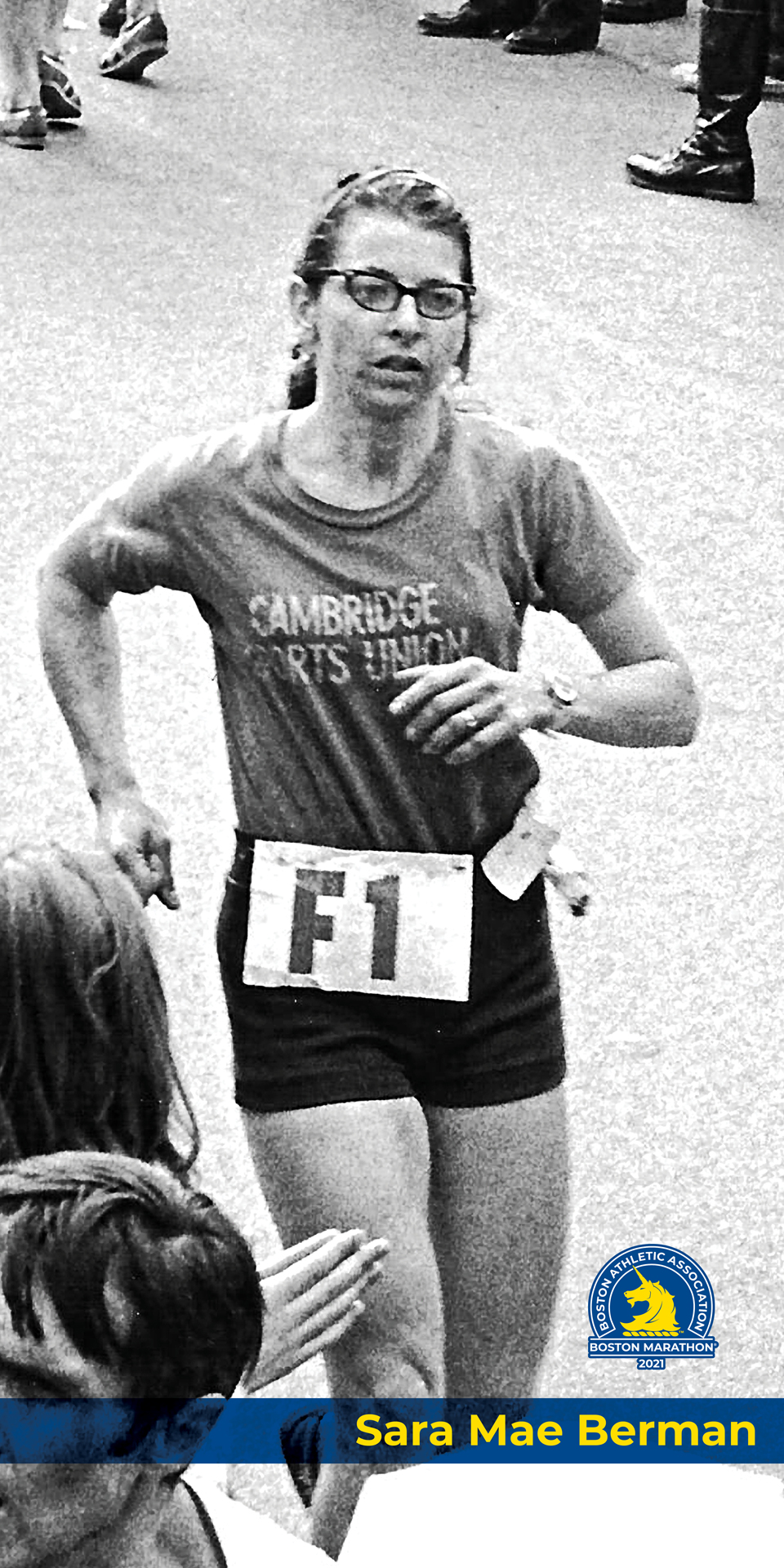
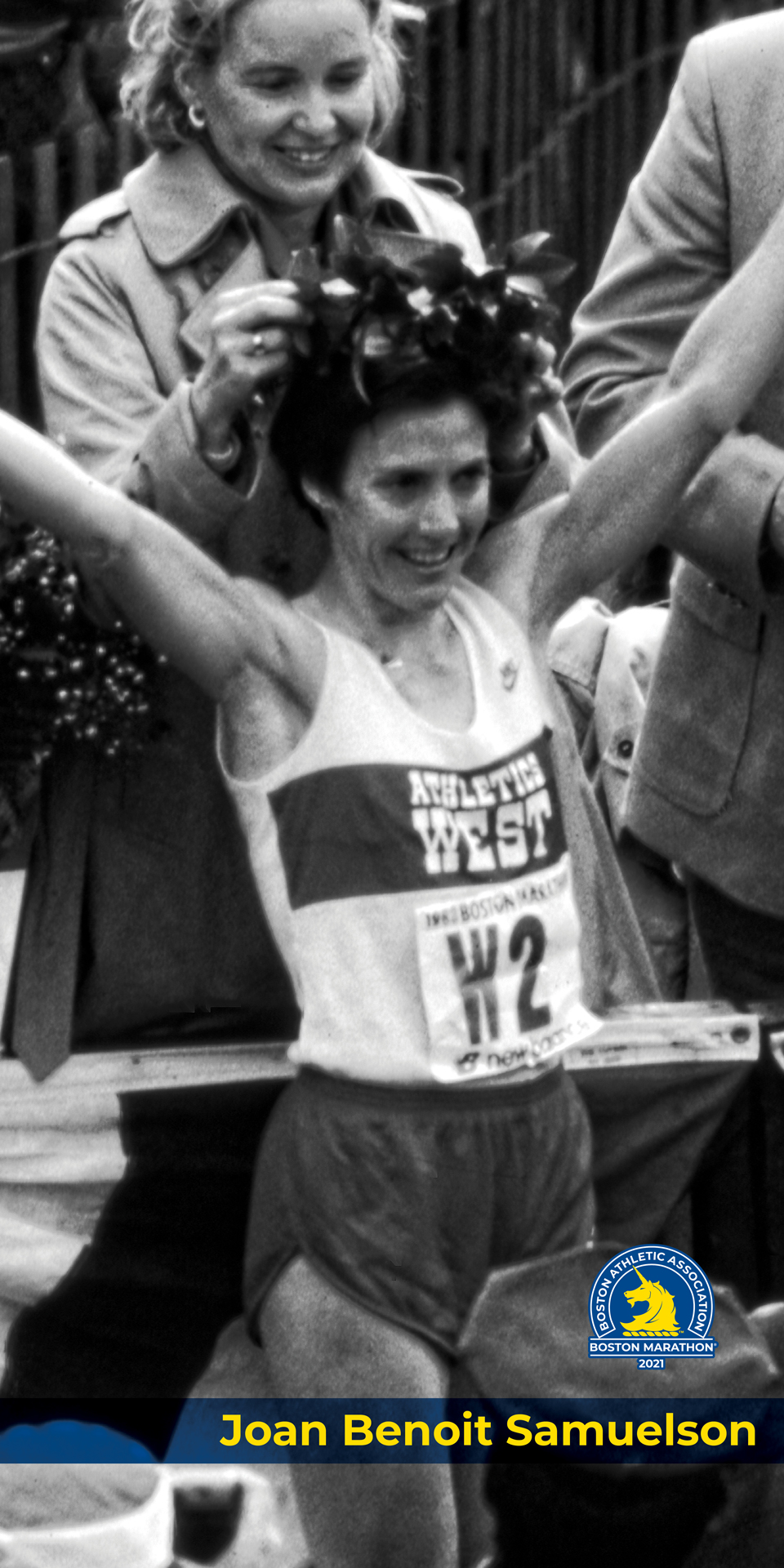
A review of running literature some years ago had led me to the training practices of Sara Mae Berman (winner of the 1969-71 Boston Marathons), Joan Benoit Samuelson (winner of the 1979 and 1983 Boston Marathons, the 1985 Chicago Marathon and Gold medalist in the first ever women’s marathon in the 1984 Los Angeles Olympics) and Jacqueline Gareau (winner of the 1980 Boston Marathon – unfortunately got Rosie Ruiz’d, the 1984 LA International Marathon and the 1988 Grandma’s Marathon; I couldn’t find an equivalent photo/banner from the BAA). All three of them used (and some still do) cross country skiing in winter months to minimize the impact on joints while adding to their aerobic base and strengthening their upper bodies.
Foundation Phase
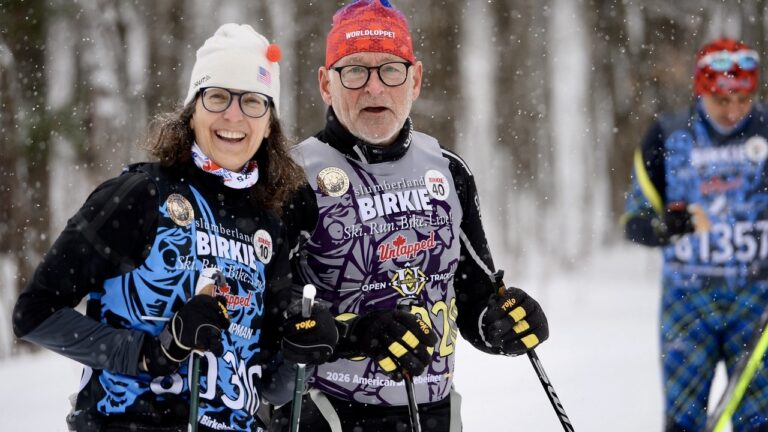
I too get to live in a four-season wonderland like the aforementioned first ladies of running. The 24-week foundation phase of the 40-week macrocycle started in late 2021 Fall and ran through all of 2021-22 Winter. So, seasonal variations decided which activity (running or cross country skiing) took precedence over the other. As a result, the prescribed distance (or duration) was only a suggestion – especially once our trails were skiable. My main goals for this phase were as follows:
- Improve the fundamentals of cross country skiing.
- Ski the Korte and Birkie at the 2022 American Birkebeiner on back to back days.
- Integrate supplemental activities and habits into a weekly routine.
Summary2021-11-29 - 2022-05-15Time in h:mm:ss, distance in miles (and kilometers) and elevation gain in feet (and meters) |
|||||
|---|---|---|---|---|---|
| # | Activity Class and Type | Count | Duration | Distance | Elevation |
| 1 | Hike | 5 | 2:49:12 | 4.91 (7.91) | 551 (168) |
| 2 | Run | 46 | 36:35:40 | 222.46 (358.16) | 6493 (1979) |
| 3 | Strength | 31 | 30:26:50 | - | - |
| 4 | Cross Country Ski (Classic) | 44 | 72:27:07 | 390.41 (628.56) | 35869 (10933) |
| 5 | Cross Country Ski (Skate) | 59 | 63:21:40 | 402.29 (647.69) | 23376 (7125) |
| Training Activities | 185 | 205:40:29 | 1020.07 (1642.31) | 66289 (20205) | |
Mother Nature tussled between letting Winter go and embracing Spring as the foundation phase drew to a close. My cross country skiing season officially ended in week #22 – leaving me with 2+ weeks to find my running legs. Having run on and off – more off than on but a lot less off compared to a year ago (thanks, Steph!) – during the foundation phase made the transition to running much easier. Once I got over the soreness that follows the first strength work in quite some time, turnover felt a bit easier and heart rate started going down.
In summary, I ran 220+ miles, hiked about 5 miles, cross country skied 1270+ kilometers, prehabbed for 120+ hours, strength trained for 10+ hours and yoga’d for ~20 hours – for a grand total of 1000+ miles, 325+ hours, 65k+ feet of elevation gain, seemingly countless meals and many of them shared with friends – during the foundation phase. In hindsight, I should have made more room and time for running by keeping at least one workout – even if it meant running on the treadmill – to gradually improve the speed over this period.
For the next 16 weeks or so, I believed that all that I had gained in cross country skiing – mostly endurance, aerobic fitness and some upper body strength – would cross over to running, and that I’d be able to add layers of speed moving forward. My commitment to making sustainable habits of little but important supplemental activities – more of hydration, nutrition, meditation, sleep, strength training, yoga and less of Facebooking and YouTubing – had some setbacks and false starts along the way as well. Strava has grander details for each completed activity in this phase, if interested.
Marathon Phase
In an attempt to keep the training consistent and implement the lessons reinforced from further pursuing USA Track and Field Coaching Education (Level 2 with an emphasis on endurance) in 2022 June/July, I signed up for very few races. I found ways to be a part of almost all local/regional events but limited hard racing efforts to Bellin Run in mid-June (the only one that included an overnight stay), Canal Run Half Marathon in mid-July and Queen City Half Marathon in late July.
Overall Summary2022-05-16 - 2022-09-04Time in h:mm:ss, distance in miles (and kilometers) and elevation gain in feet (and meters) |
|||||
|---|---|---|---|---|---|
| # | Activity Class and Type | Count | Duration | Distance | Elevation |
| 1 | Hike | 19 | 18:44:41 | 48.35 (77.84) | 4458 (1359) |
| 2 | Run | 115 | 119:08:30 | 757.35 (1219.33) | 25105 (7652) |
| 3 | Strength | 33 | 29:37:49 | - | - |
| Training Activities | 167 | 167:31:00 | 805.70 (1297.18) | 29563 (9011) | |
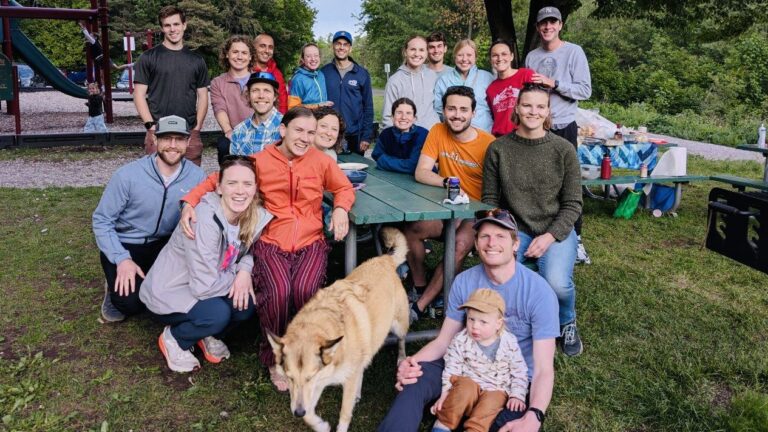
In addition to the above tangible metrics, I got to sharemany miles and meals with friends. I completed just about every workout as prescribed and my commitment to more of hydration, nutrition, meditation, sleep, strength training, yoga and less of Facebooking and YouTubing was considerably better that it had ever been before. Strava has grander details for each completed activity in this phase as well, if interested.
Race week(end)
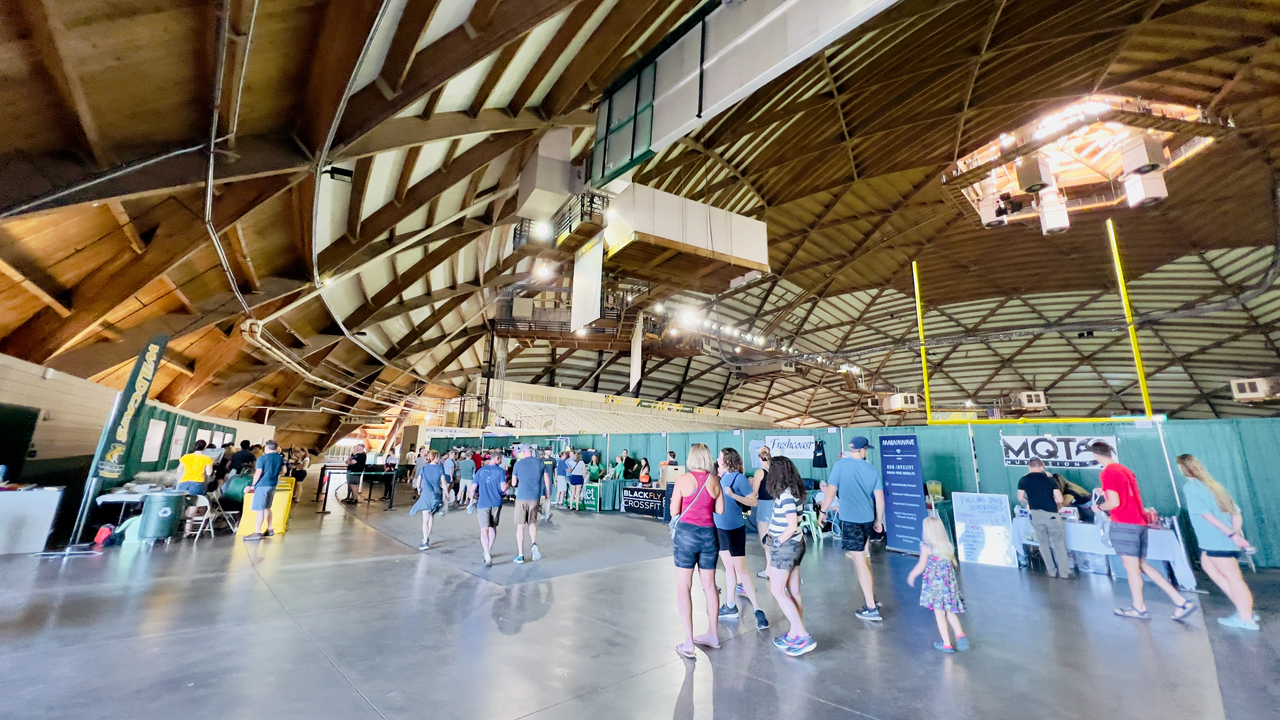
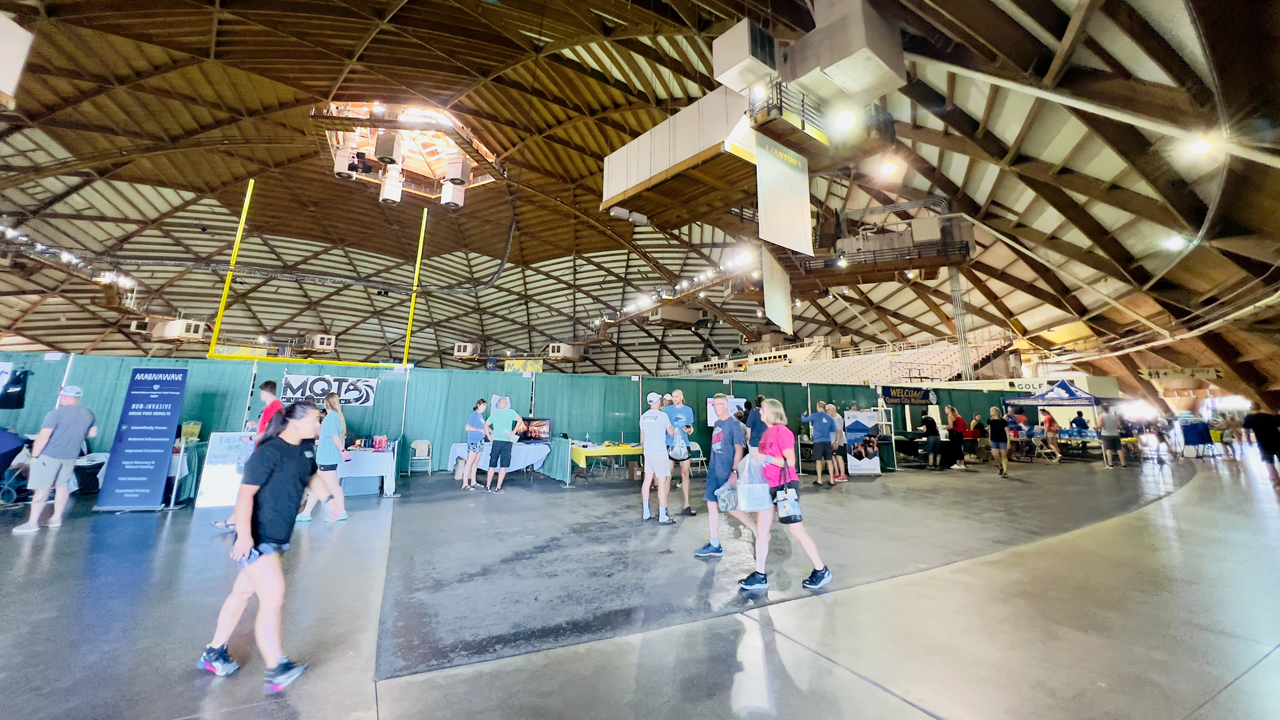
My boss graciously offered time off from work starting Wednesday. I left Houghton around 9 am on Friday after first of the two wellness checks for the day, and the 2-ish hour drive to Marquette was smooth and uneventful. Upon completing the second of the two wellness checks for the day (thanks, Kevin!), I walked over to the pre-race expo at the Superior Dome – a few hundred yards from the Superior Stay Hotel I’d call home for the weekend. After picking up my race packet, I spent a meaningful amount of time walking through the expo, and catching up with friends, and friendly, familial and caring faces.
Checking into the Superior Stay Hotel was smooth and straightforward as it had been during multiple times over the past year for various reasons and twice specifically for marathon training purposes. Bringing my own food helped stay on schedule and avoid potentially longer wait times given the number of out of towners in town for the event. Catching up with Gabe on the way to and in Casa Calabria, and Adam and Jess over an Athletic Brewing brew at the Blackrocks Brewery were the evening’s highlights before calling it a night around 9 pm.
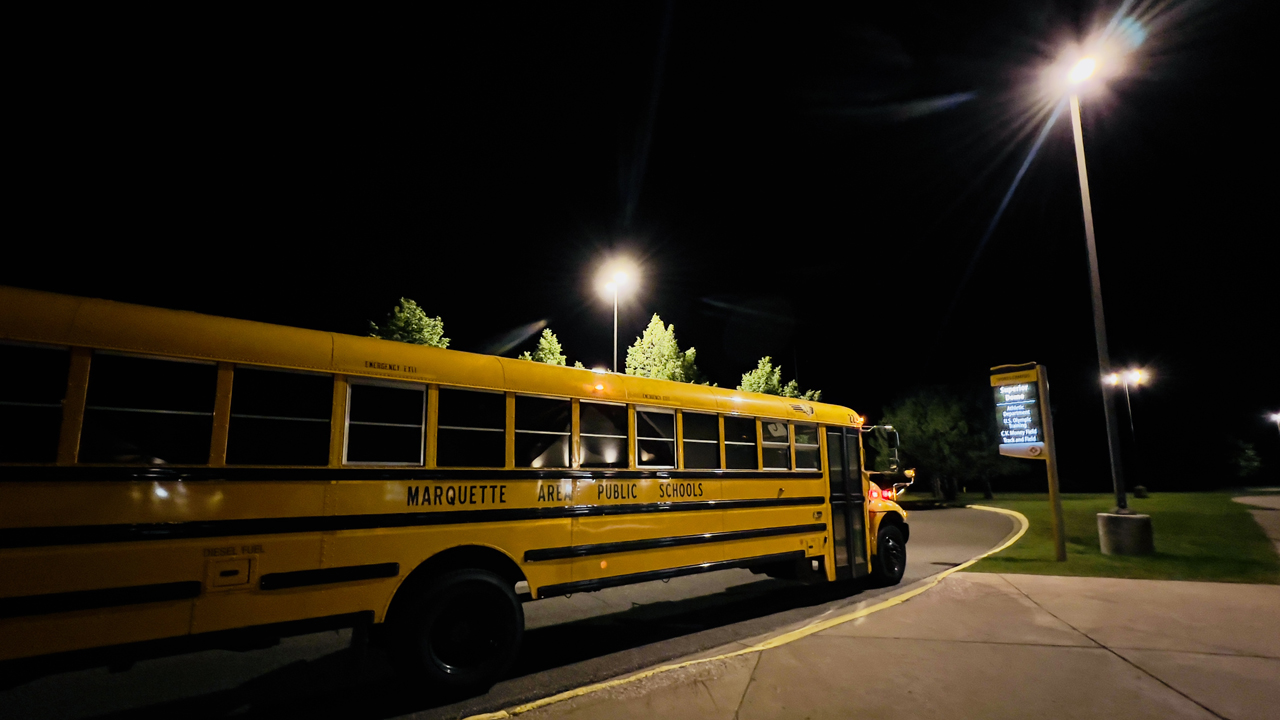
Race day morning came early but after a full night restful sleep. Having practiced this routine just about every day for the past 110 or so days, waking up at 4 am didn’t feel difficult (or in the jovial words of one of my dear friends, dehumanizing). I completed items on my checklist by 5:15 am and walked over to the bussing area. The communal ride took its time but we arrived in Ishpeming by 6:10 am. The next 50 or so minutes of this blessedly windy and cooler morning were spent in the warm and cozy confines of Kevin‘s truck – a luxury that almost none of my fellow racers got to enjoy.
As planned, the warm-up routine went well and the event started on time. I ran with ease and peace, a smile on my face and according to the plan – starting slow and negative splitting with each passing quarter. Two incidents beyond my control – Close Encounters Of The Weird Kind shortly after 10k and a Detachment Issue in the third quarter – ended my run shortly before the 15-mile mark. The course awareness definitely played a vital role in stopping when I did and getting the necessary help and in stepping off the course with shortest possible walk back to the hotel. I’d be remiss if I didn’t acknowledge the energy that coaches and student athletes from the Northern Michigan University who volunteered at many, if not all, aid stations and road crossings along the course brought to the day’s proceedings! I’d also be remiss if I didn’t mention the phenomenal work of the race directors – Derek and Kevin (listed alphabetically) – and their whole team in converting the Marquette Marathon from just a race to a weekend long fun event for the whole family!!
As they were happening, I knew similar incidents had happened to Deena, Meb and Eliud. I just didn’t have the mental wherewithal they did (or still do) to overcome them and still perform as I had imagined. After a quick stop at the finish area to report myself as a DNF, pick up the drop bag and chat with dear friends, I made peace with the day’s proceedings, forgave myself for not digging deep enough and returned home before the fatigue set in.
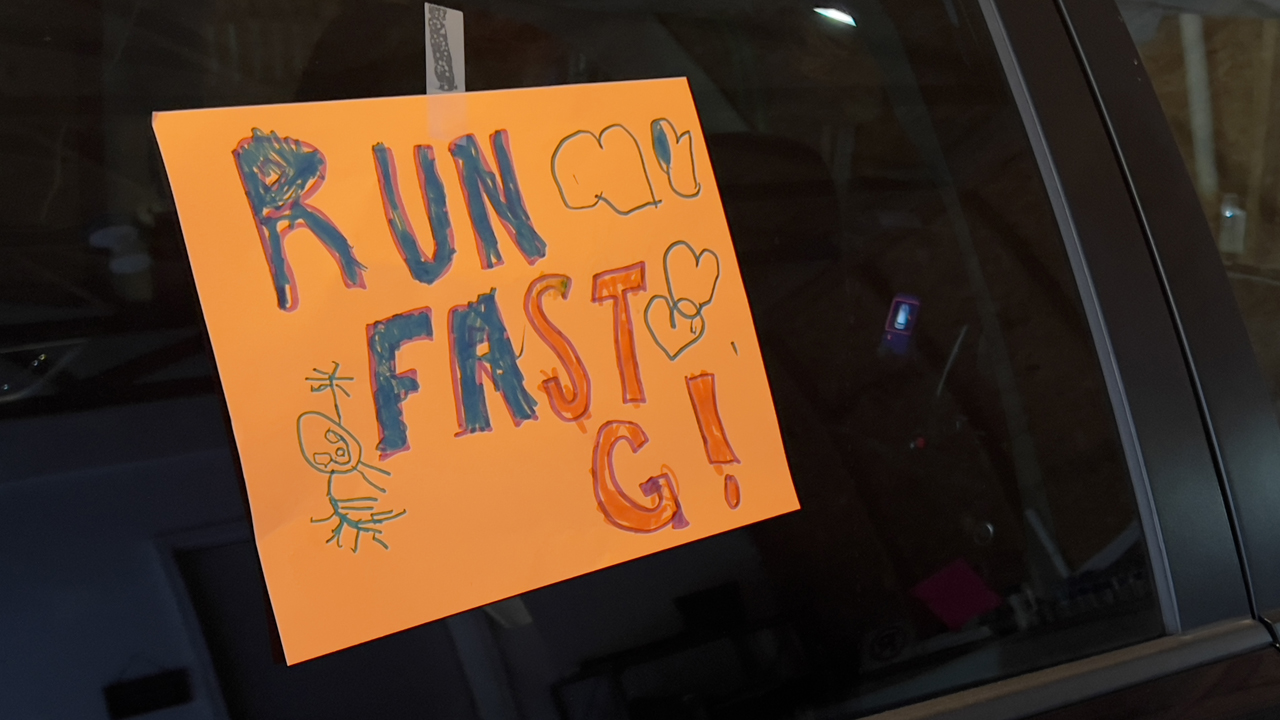
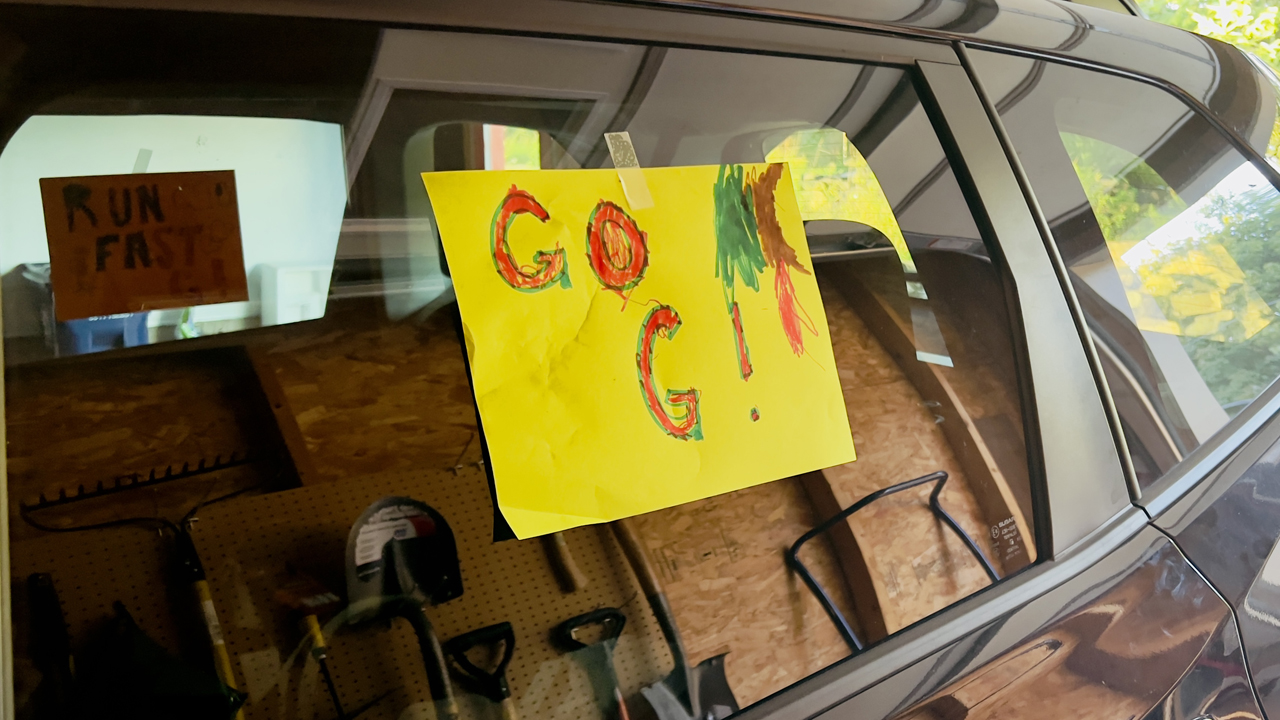

Lessons moving forward

In spite of the this long and fruitful training block ending in a trip to the Queen City in Ohio from the Queen City in Michigan, there were a lot of positives to feel good about and take forward. I was (and am) very grateful for my family of friends in and around the community that keeps me sane, for my overall good health and wellbeing that affords me the ability to train, and for many other unseen blessings of life. Consistent training would have been nearly impossible without the flexible working schedule my boss provided (and continues to do so). I expect to implement the following lessons learned along the way and on race day in subsequent training blocks:
- Retaining a semblance of running (and speed work, even if minimal) throughout our winter months, and sustaining supplemental activities (e.g., strength training, pre-run/ski mobility, post-run/ski stretch, etc.) and habits (e.g., nutrition, hydration, sleep, etc.) .
- Reviewing the chosen training plan with someone more knowledgeable, understanding the finer prints and being ok with using time (instead of distance) for prescribed activities.
- Continuing to work on things that are under my control and get better at them
- Improving course intelligence (either training on the real course or mimicking it locally the best possible way).
- Learning to trust the process in athletic endeavors, learning to distinguish between thinking and believing, and learning to have faith and belief in the training as it happens and in hindsight (i.e., on race day).
- Improving mental fortitude and physical speed – especially while running solo.
Thanks be to
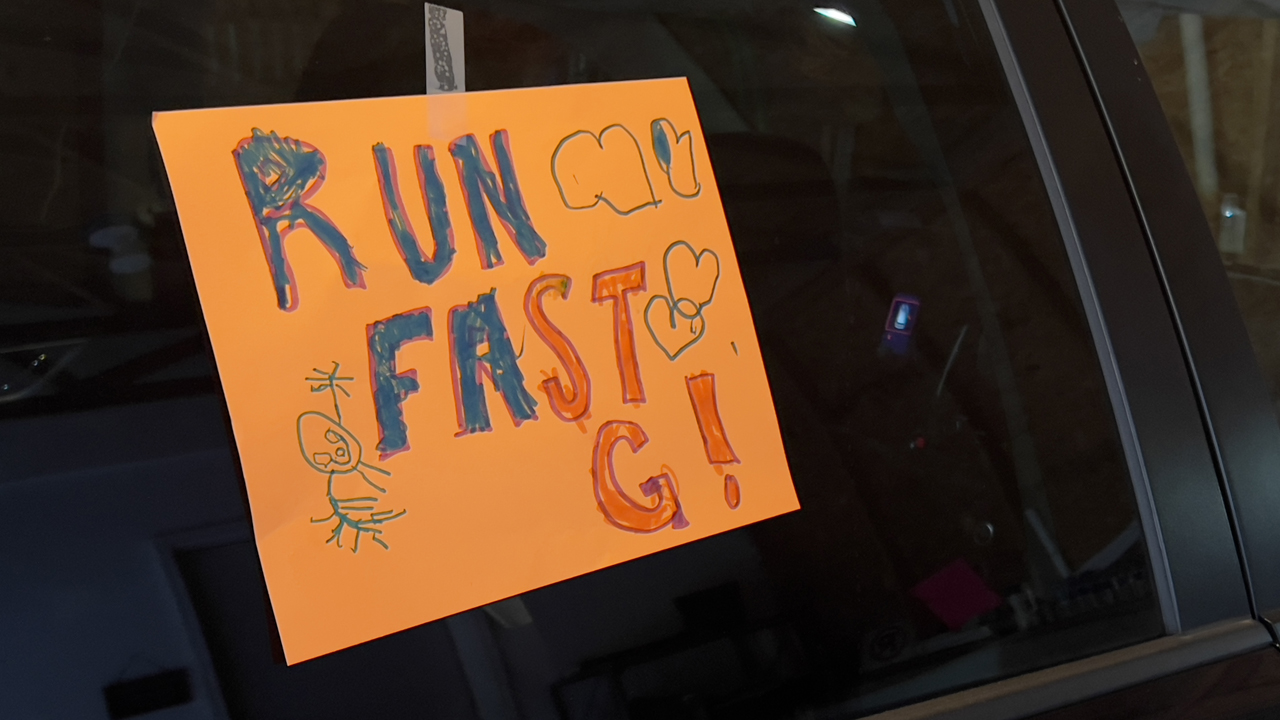
the rejections and opportunities life has brought my way, event folks (organizers, sponsors, volunteers, timers, law enforcement officials, photographers, fellow participants and spectators) and my family of good friends, mentors and coaches in and outside of my community for all the unexpected, undeserved and unrewarded acts of kindness and constant encouragement as well as offerings of constructive criticism to improve myself as a human and an athlete. I am eternally grateful to all those who let me train with them, who shared their meals and experiences with me, who helped keep me in good health, who helped me stay the course, and who cheered me on from home or along the course.